
List of Contents
The Beginner's Guide to Learning How to Smoke a Brisket
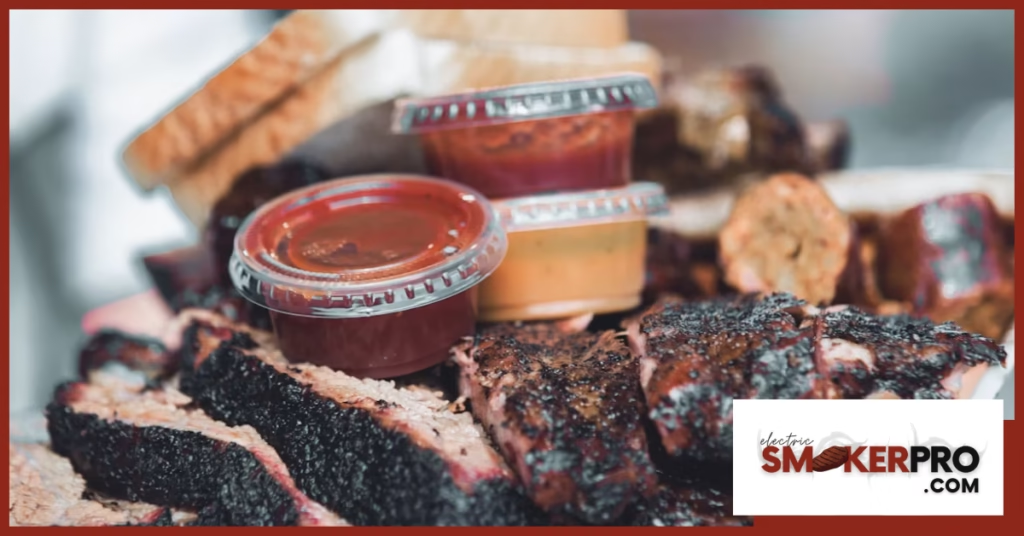
There’s something magical about pulling a perfectly smoked brisket from your smoker. The deep mahogany bark, the tender meat that practically falls apart, and that unmistakable smoky aroma that makes neighbors peek over the fence. If you’ve been intimidated by the idea of smoking your first brisket, you’re not alone. But here’s the good news: learning how to smoke a brisket is more achievable than ever, especially when you’re using an electric smoker.
Brisket has earned its reputation as the ultimate barbecue challenge, but it’s also surprisingly beginner-friendly when you understand the basics. Unlike traditional offset smokers that require constant fire management, electric smokers maintain steady temperatures with minimal intervention. This means you can focus on the fundamentals without worrying about temperature swings or running out of fuel at 3 AM.
How to Smoke a Brisket: Choosing the Right Cut
Before you fire up your smoker, you need to select the right piece of meat. When shopping for brisket, you’ll encounter two main options: the flat cut and the point cut.
The flat cut (also called the “first cut”) is leaner and more uniform in shape, making it easier to slice for presentation. The point cut contains more fat and connective tissue, resulting in incredibly juicy, flavorful meat that’s perfect for chopped brisket or burnt ends.
For beginners learning how to smoke a brisket, a whole packer brisket (which includes both cuts) offers the best of both worlds, though a flat cut is perfectly acceptable if you want something more manageable.
Regardless of which cut you choose, look for good marbling. Those white streaks of fat running through the meat equal flavor and tenderness, so don’t shy away from a well-marbled piece.
How to Smoke a Brisket: Prep and Seasoning Essentials
Proper preparation sets the foundation for success. Start by trimming your brisket, removing any hard fat chunks and the silver skin (that shiny membrane on the meat’s surface). Leave about a quarter-inch of fat cap intact to protect the meat during the long cook and add moisture.
Next, apply your seasoning. A simple dry rub of coarse black pepper and kosher salt (often called a “Dalmatian rub”) is the classic Texas approach and works beautifully. Feel free to add garlic powder, onion powder, paprika, or your favorite barbecue rub for more complexity.
After seasoning, wrap your brisket and let it rest in the refrigerator for at least 4 to 6 hours, or ideally overnight. This resting period allows the salt to penetrate the meat and the flavors to meld together.
How to Smoke a Brisket: Setting Up Your Electric Smoker
Preheat your electric smoker to 225 to 250°F (107 to 121°C). This temperature range is the sweet spot for breaking down the tough connective tissues in brisket while keeping the meat moist.
Fill your smoker’s water pan. This creates a humid environment that prevents your brisket from drying out during the extended cooking time. The water also helps regulate temperature fluctuations.
Choose your wood chips based on your flavor preferences. Hickory delivers a robust, traditional smokiness. Oak provides a medium smoke flavor that complements beef perfectly. For something milder and slightly sweeter, try apple or cherry wood. Many pitmasters blend different woods for unique flavor profiles.
How to Smoke a Brisket: The Smoking Process
Here’s where patience becomes your greatest asset. Plan for 8 to 12 hours of cooking time, depending on your brisket’s size (roughly 1 to 1.5 hours per pound). Place your brisket fat side up on the grates and close the door.
Resist the urge to constantly check on your meat. Every time you open the smoker, you lose heat and smoke, extending your cooking time. Trust the process and maintain that consistent temperature.
Use a reliable meat thermometer to monitor your brisket’s internal temperature. You’re aiming for 195 to 205°F in the thickest part of the meat. At this temperature, the collagen has broken down into gelatin, creating that melt-in-your-mouth tenderness.
How to Smoke a Brisket: Wrapping and Finishing Techniques
Around the midpoint of your cook (typically when internal temperature reaches 160 to 170°F), your brisket may hit “the stall.” This is a frustrating plateau where the temperature refuses to climb. This is normal.
The Texas Crutch technique helps power through the stall: wrap your brisket tightly in aluminum foil or butcher paper. Foil speeds up cooking and retains more moisture, while butcher paper allows some moisture to escape, preserving your bark’s texture.
If you want to add barbecue sauce, brush it on during the last 30 to 60 minutes of cooking. Once your brisket reaches the target temperature, remove it from the smoker but don’t slice it yet. Let it rest for 30 to 60 minutes, wrapped in towels inside a cooler if needed. This allows the juices to redistribute throughout the meat.
Tips for Achieving the Best Results
- Keep the smoker closed as much as possible to preserve smoke and heat
- Rotate your brisket occasionally if your smoker has hot spots
- Never rush the cook because low and slow wins the race
- Always use a meat thermometer rather than relying on time alone
Conclusion
Learning how to smoke a brisket might seem daunting, but electric smokers have removed many barriers that once made this craft intimidating for beginners. By focusing on proper preparation, maintaining patience, and carefully monitoring your cook, you’ll achieve tender, flavorful results that rival your favorite barbecue restaurant.
Once you’ve mastered brisket, you’ll have the confidence and skills to tackle pulled pork, ribs, and other smoked delicacies. So fire up that electric smoker because your barbecue journey starts now.